
Naimisharanya is often described as one of the oldest sacred places in Hindu tradition. But an interesting question goes much deeper than simply asking how old the place is:
Did Naimisharanya exist before Treta Yuga?
According to the traditional Puranic understanding, yes. The Matsya Purana specifically associates Naimisha Kshetra with the Kṛta Yuga, also known as Satya Yuga. In the same passage, Pushkara is associated with Treta Yuga, Kurukshetra with Dvapara Yuga, and the Ganga with Kali Yuga.
This is significant because Satya Yuga comes before Treta Yuga in the traditional Hindu sequence of the four Yugas.
But there is an important distinction to understand. Saying that Naimisharanya existed in Satya Yuga is a statement based on Hindu sacred literature and traditional chronology. It is not the same thing as saying that modern archaeology has established a physical date for the forest going back to Satya Yuga.
So, what exactly do the scriptures say about Naimisharanya, when does its story begin, and why is this ancient forest connected with so many sages, yajnas and sacred texts?
Let’s explore it step by step.
InShort Answer: Did Naimisharanya Exist Before Treta Yuga?
The meaning is that in Kṛta Yuga, Naimisha was foremost; in Treta Yuga, Pushkara was foremost; in Dvapara Yuga, Kurukshetra was prominent; and in Kali Yuga, the Ganga is especially distinguished.
This is one of the strongest scriptural references for the question of whether Naimisharanya existed before Treta Yuga.
In other words, within this traditional chronology, Naimisharanya is not introduced as a place that first appeared during Treta Yuga. It is already associated with the preceding Kṛta/Satya Yuga.
Understanding the Yuga Sequence
To understand why this matters, it is important to know the traditional order of the four Yugas.
The sequence is:
Satya Yuga / Kṛta Yuga → Treta Yuga → Dvapara Yuga → Kali Yuga
Satya Yuga is traditionally described as the first of the four Yugas, followed by Treta, Dvapara and Kali.
Therefore, when a Purana associates Naimisha with Kṛta Yuga, that places Naimisha before Treta Yuga in the traditional sacred chronology.
This is why the question “Was Naimisharanya present before Treta Yuga?” has a meaningful answer within Hindu scriptural tradition.
However, this should not be confused with a modern archaeological dating system. Hindu texts use their own sacred chronology, while archaeology and conventional history use material evidence and different methods of dating.What Does the Matsya Purana Say About Naimisharanya?
The Matsya Purana contains an especially important statement in Chapter 106.
The Sanskrit verse begins:
“Kṛte tu Naimiṣaṃ kṣetraṃ…”
The important word here is Kṛte, referring to the Kṛta or Satya Yuga.
The verse then gives a Yuga-wise association:
| Yuga | Sacred place associated in the verse |
|---|---|
| Kṛta / Satya Yuga | Naimisha |
| Treta Yuga | Pushkara |
| Dvapara Yuga | Kurukshetra |
| Kali Yuga | Ganga |
This does not merely describe Naimisha as an old forest. It places Naimisha within a Yuga-based sacred geography.
That makes the Matsya Purana particularly relevant when researching the history of Naimisharanya and its connection with Satya Yuga.
Does This Mean Naimisharanya Was Created in Satya Yuga?
Not necessarily.
This is an important distinction.
The verse from the Matsya Purana tells us that Naimisha was a foremost sacred kshetra in Kṛta Yuga. It does not, by itself, give a precise creation date for the forest.
There are other Puranic traditions that explain how Naimisharanya received its name and how it became a sacred place.
Therefore, it is better to say:
“The Matsya Purana associates Naimisha with Kṛta/Satya Yuga.”
It is less accurate to turn that statement into:
“The Matsya Purana says Naimisharanya was physically created on a specific date in Satya Yuga.”
The first statement is supported by the text. The second goes beyond what that particular verse actually says.
The Story of the Manomaya Chakra
One of the best-known traditions about the origin of Naimisharanya involves Brahma and the Manomaya Chakra.
According to this traditional account, the sages wanted a suitable place for spiritual practice and a great sacrificial session. Brahma released a divine chakra and instructed them to follow it.
The place where the chakra’s nemi, or rim, came to rest became associated with Naimisha.
This story is important because the name Naimisha itself has traditionally been connected with the chakra and its rim.
Different Puranic traditions present variations in the story, so it is better not to treat every version as if it came from one identical source.
The larger idea remains the same: Naimisharanya is portrayed as a sacred place selected or revealed for the spiritual practices of sages.
That is one reason the forest occupies such an important place in Hindu sacred geography.
Why Is Naimisharanya Called Naimisha?
The name Naimisha has been explained through different traditional interpretations.
One important explanation connects it with the nemi, the rim or outer portion of the divine chakra.
Another tradition connects the name with the rapid destruction of demonic forces in the forest.
These explanations appear in different Puranic traditions, which is why it is useful to say that Naimisharanya has multiple traditional explanations for its name rather than presenting only one version as universally accepted.
The word Aranya means forest.
Thus, Naimisharanya is commonly understood as the forest of Naimisha.
It is also known as Naimisha, Naimisha Kshetra and Naimisha Aranya.
Naimisharanya in the Bhagavata Purana
The importance of Naimisharanya does not stop with one verse of the Matsya Purana.
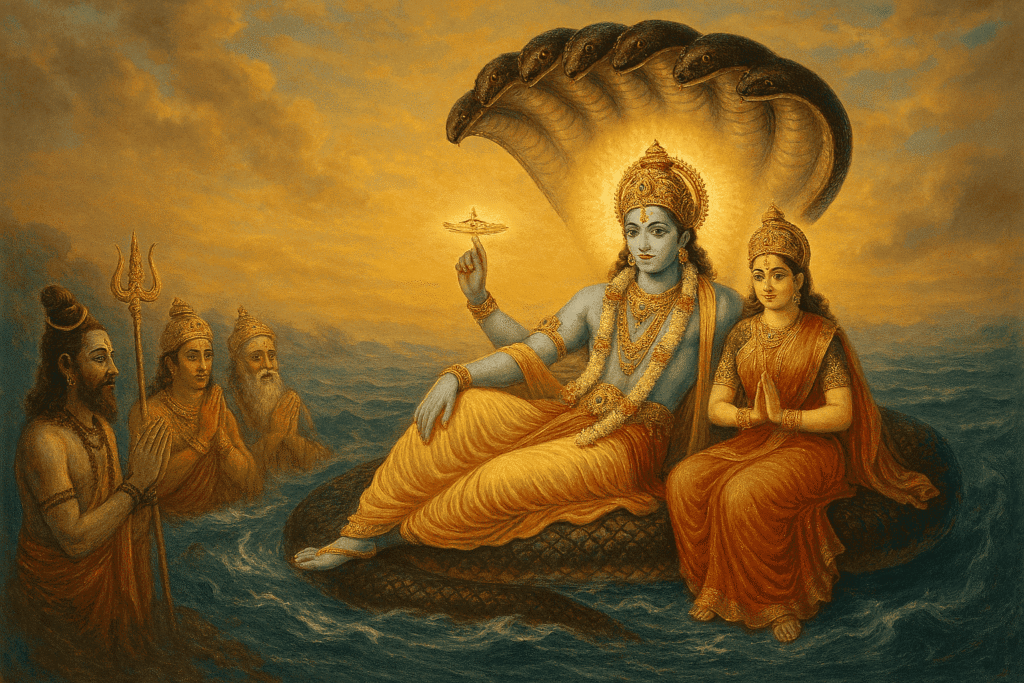
The Bhagavata Purana opens its first Skandha with a gathering of sages in the Naimisha forest.
The text describes sages led by Shaunaka holding a long sacrificial session in Naimisha. They then question Suta, asking him about the highest spiritual teachings and sacred histories.
This is an important feature of Naimisharanya’s literary and religious identity.
Naimisharanya is not simply presented as a forest where people travelled for pilgrimage.
It is portrayed as a place where:
- sages gathered,
- yajnas and sacrificial sessions took place,
- spiritual questions were asked,
- sacred knowledge was transmitted,
- and ancient histories and Puranic teachings were narrated.
That tradition gives Naimisharanya a special connection with the preservation and transmission of Hindu sacred literature.
Naimisharanya and Shaunaka Rishi
Among the most important figures connected with Naimisharanya is Shaunaka Rishi.
In the Puranic and epic traditions, Shaunaka appears as the leader of a gathering of sages.
His name is especially important because the Naimisha forest becomes the setting for conversations between the sages and Suta.
This creates a recurring pattern in Hindu sacred literature:
Naimisharanya → sages → yajna → questions → Suta → narration of sacred history
That pattern appears across different texts and traditions.
It is one reason Naimisharanya has been remembered not merely as a pilgrimage site but also as a traditional centre of spiritual learning and sacred storytelling.
Naimisharanya and Suta Goswami
Suta, also known as Suta Goswami in many Vaishnava traditions, occupies a central place in the narrative tradition associated with Naimisharanya.
The sages gathered in the forest ask him to explain spiritual subjects and recount sacred histories. This is particularly important for understanding why Naimisharanya appears so frequently in discussions of the Puranas.
The forest becomes a setting where knowledge moves from one generation to another. The sages listen. Suta narrates.
The stories are preserved. And later generations receive those teachings through the texts.
This literary structure gives Naimisharanya a unique place in Hindu religious memory.
Naimisharanya in the Mahabharata Tradition
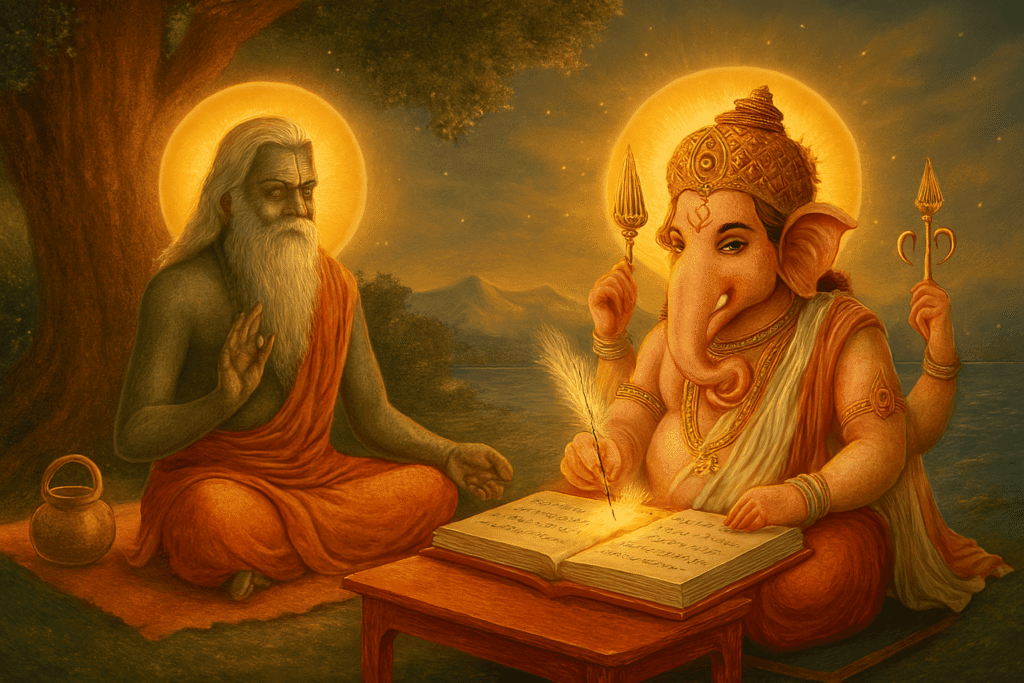
Naimisharanya is also closely associated with the Mahabharata tradition.
The opening of the Mahabharata introduces Ugrashrava Sauti arriving at the forest of Naimisha, where sages led by Shaunaka are engaged in a long sacrificial session.
The sages ask him to narrate ancient stories, including the history of the Bharata dynasty.
This makes Naimisharanya an important setting in the transmission of the Mahabharata narrative.
The significance is deeper than simply being a geographical location.
The forest functions as a traditional meeting place between:
sages + storytellers + sacred knowledge + ancient history
That is one reason the name Naimisharanya continues to appear whenever people study the Puranas and Mahabharata.
Was Naimisharanya Present During Treta Yuga?
If Naimisha is associated with Kṛta/Satya Yuga, then it naturally raises another question:
What happened to Naimisharanya during Treta Yuga?
The answer requires some care.
Hindu sacred literature does not always present the history of Naimisharanya as one simple continuous modern-style timeline.
Different texts preserve different stories involving the forest.
The important point is that the association of Naimisha with Kṛta Yuga does not mean that its religious importance ended when Treta Yuga began.
Instead, Naimisharanya continues to appear in later sacred traditions.
This is why it is better to think of Naimisharanya as a continuing sacred kshetra across different periods of Hindu sacred history, rather than trying to assign it one single historical episode.
Naimisharanya in Dvapara Yuga
Naimisharanya also remains important in traditions connected with the Dvapara period and the transmission of the Mahabharata and Puranic literature.
The Mahabharata’s framing narrative places sages in Naimisha listening to Ugrashrava Sauti.
The Bhagavata Purana likewise presents Naimisha as a place where sages gathered for an extended sacrificial session.
This gives the forest an important role in the traditional preservation of knowledge.
Rather than being remembered for only one temple or one event, Naimisharanya became associated with an entire culture of yajna, discussion, teaching and sacred narration.
Naimisharanya in Kali Yuga
Naimisharanya remains a major pilgrimage destination today.
The ancient Naimisha tradition is still reflected in the names of places and pilgrimage sites associated with the area, especially Chakra Tirtha and the various temples and sacred locations visited by pilgrims.
For modern visitors, Naimisharanya is located in Sitapur district of Uttar Pradesh, and the sacred landscape is associated with the Gomti region.
A pilgrimage to Naimisharanya therefore connects a modern journey with a much older religious tradition.
Visitors today may come for:
- Chakra Tirtha darshan
- Lalita Devi Temple
- Vyas Gaddi
- Suta Gaddi
- Dadhichi-related traditions
- Hanuman Garhi
- ancient temples
- religious ceremonies
- yajna and spiritual activities
- pilgrimage and sightseeing
For someone visiting Naimisharanya today, these places provide a physical connection to stories that have been preserved through generations of Hindu tradition.
Is Naimisharanya Older Than Ayodhya?
This is a question that naturally follows from the Satya Yuga connection.
However, it is not wise to give a simple “yes” based only on the Matsya Purana verse.
Why?
Because the verse establishes an association between Naimisha and Kṛta Yuga, but it does not provide a comparative archaeological date for Naimisharanya and Ayodhya.
Ayodhya itself has an extremely ancient place in Hindu sacred literature and is especially associated with Lord Rama and the Ramayana tradition.
Therefore, a responsible article should say:
Traditional Hindu chronology places Naimisha in Kṛta Yuga, but this does not provide a scientifically measurable date that can be directly compared with the archaeological age of Ayodhya.
This distinction is important.
It allows us to respect the religious tradition without presenting theological chronology as archaeological proof.
Was Naimisharanya Mentioned in the Ramayana?
Naimisharanya appears in a wide range of Hindu sacred traditions, but claims about specific Ramayana events should be made carefully.
There are many later Ramayana traditions, regional narratives and Puranic accounts that connect sacred places with the story of Rama.
However, an article should not automatically claim that every Naimisharanya-Ramayana association comes directly from the oldest layer of the Valmiki Ramayana.
For SEO and credibility, it is better to distinguish between:
Valmiki Ramayana references
and
later Puranic, regional or traditional associations with Rama.
This prevents the article from becoming a collection of unsupported claims.
Naimisharanya in the Puranas
One of the strongest aspects of Naimisharanya’s history is the sheer variety of Puranic traditions associated with it.
References and traditions concerning Naimisha occur in texts including: